
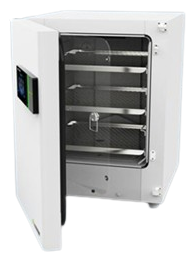
A CO2 incubator is a specialized piece of laboratory equipment designed to cultivate cells and tissues outside of a living organism. It provides a controlled environment with regulated temperature, humidity, and CO2 levels, mimicking the conditions necessary for cell growth and survival. This controlled environment is crucial for various research applications, including cell-based assays, drug discovery, and tissue engineering. Temperature Control: Maintains a stable temperature, typically around 37°C, to support cell metabolism and growth. CO2 Regulation: Regulates CO2 levels, typically around 5%, to maintain the correct pH level in the culture medium, which is essential for cell viability. Humidity Control: Provides a humidified environment to prevent cells from drying out, ensuring optimal cell growth. Contamination Control: Features various mechanisms like HEPA filters, UV sterilization, and copper alloy surfaces to prevent microbial contamination. CO2 incubators are indispensable for cell culture, which is a fundamental technique in biological research. They enable scientists to: Study cell behavior: By providing a controlled environment, researchers can observe how cells respond to various stimuli, such as drugs or environmental changes. Produce biological products: Many biological products, like proteins and antibodies, are produced using cell cultures, and CO2 incubators are essential for this process. Develop new therapies: CO2 incubators play a crucial role in drug discovery and development by providing a platform for testing potential drug candidates on cells. Advance tissue engineering: CO2 incubators are used to create three-dimensional cell cultures and develop engineered tissues for regenerative medicine.